Crawl space moisture: how to check before you spend
Why mountain crawl spaces get damp, and the ten minute look that tells you most of it.
Why damp air collects under a hillside house
Western North Carolina is humid in summer. Warm, wet air enters through foundation vents, meets cooler soil and floor framing, and drops its moisture as dew. Add uphill runoff, a downspout that ends at the wall, or a spring line in the lot, and the soil under the house stays wet most of the year. Wood that stays above about 20 percent moisture content invites rot and mold. That figure comes from general building science guidance, so ask any inspector what reading they measured.
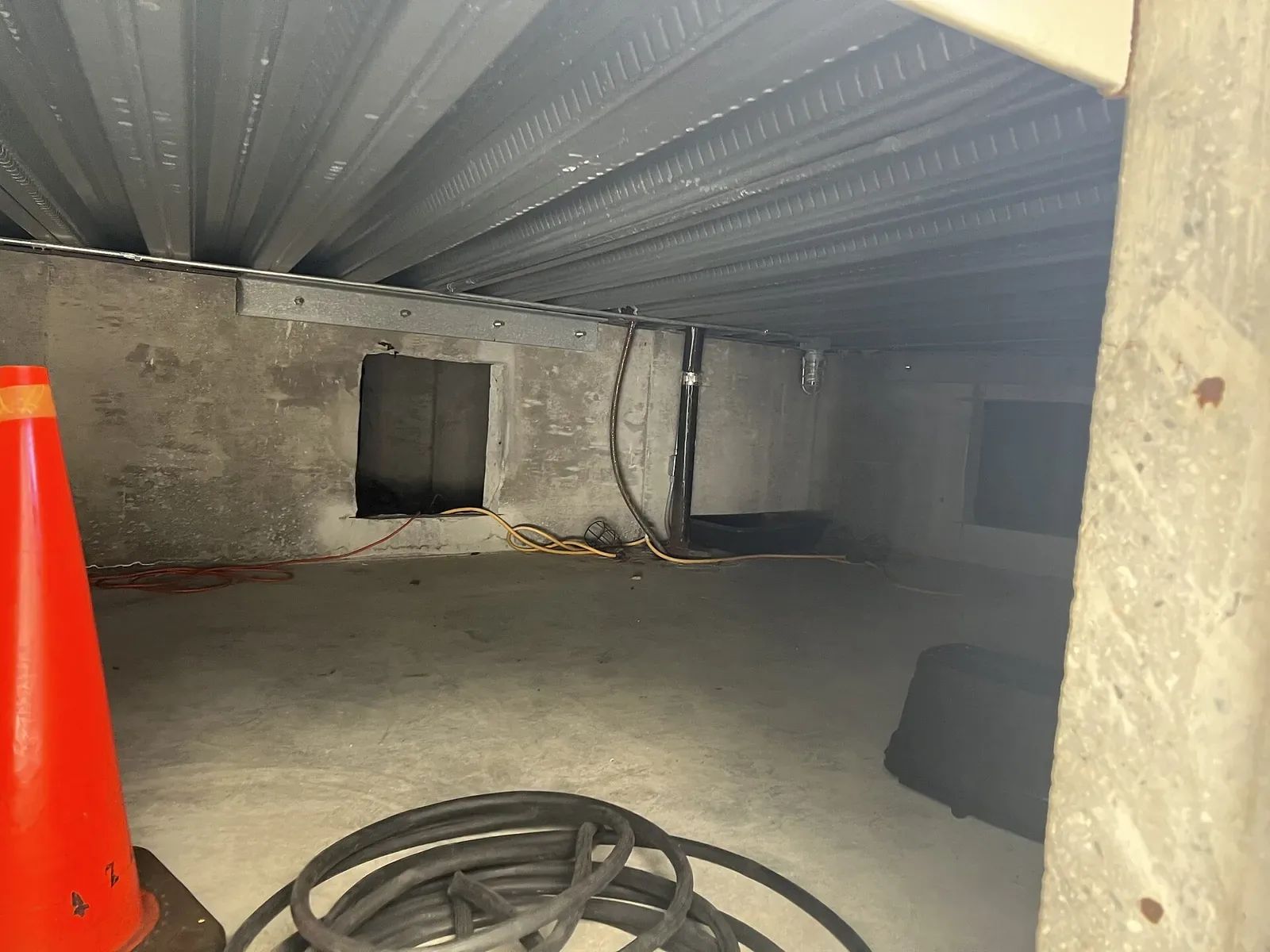
A ten minute check
- Open the access hatch and look before you crawl. A damp, earthy smell is itself a signal.
- Check the soil. Bare dirt that looks dark or shows standing water means moisture is coming from below.
- Look at the underside of the subfloor and the joists. White fuzz, black spotting or dark stains near the walls are worth a photograph.
- Check the insulation. Batts that hang or lie on the ground have absorbed water.
- Find every downspout and note where it drains.
- Look for a plastic sheet on the ground. Is it torn, pulled from the walls, or missing?
What the usual fixes are
Companies commonly describe three levels. A basic vapor barrier is a thin plastic sheet over the soil. A full encapsulation uses a thicker liner sealed up the walls and to the piers, often with a dehumidifier. Foam on the walls adds insulation. Published North Carolina ranges are on the price page. The right level depends on how much liquid water enters, which is why drainage outside comes first on a slope.
Be careful with the sales pitch
Some crawl spaces only need gutters fixed and a vapor barrier laid. Others have rotted joists that need replacing. Ask the visitor to show you the moisture reading and the wood, not only a photograph of the dirt. Ask whether the job needs a permit from your local office; the permit page helps.
Crawl space work that also touches structure, such as replacing beams or piers, is foundation work. See foundation problems.
Where these facts came from (read 4 November 2026)
- General building science guidance on wood moisture and crawl space ventilation from public university extension materials; no Buncombe specific study was found.
- Price ranges from published guides, listed on the price page.